

How to Stop Lipstick Getting on Your Teeth
Short answer: Lipstick migrates onto teeth when excess colour sits on the wet inner rim of your lips. Blot after applying, do the classic "finger pull" to remove the product that would otherwise transfer, keep the inner edge of the lip lighter than the outer, and favour formulas that grip rather than slip. A quick mirror check before you leave finishes the job.
It is one of the small, universal indignities of wearing colour: you feel polished, you smile, and there it is — a smudge of red or berry on your front teeth. The good news is that it is entirely preventable once you understand why it happens. At SYNC we think of it as a placement and formula problem, not bad luck.
Why does lipstick end up on your teeth?
Your lips have a wet inner rim where the coloured part meets the moist inside of your mouth. When you load product all the way to that edge, the colour has nowhere to go but onto your teeth as you talk, drink and smile. Slippery, heavily emollient formulas make it worse because they never fully set, so the pigment stays mobile all day.
Three factors decide whether you get teeth transfer:
- Placement — how close the colour sits to the inner wet line.
- Formula — whether it grips the lip or stays slippery.
- Excess — how much surplus product is sitting on the surface after application.

How do you stop lipstick transferring to your teeth?
The technique below takes about thirty seconds and works with almost any formula, from a sheer tint to a full opaque lip.
- Prep first. Exfoliate flaky patches with a gentle scrub such as our Matcha Lip Scrub, then let a thin layer of balm absorb. A smooth, non-greasy base helps colour sit where you place it.
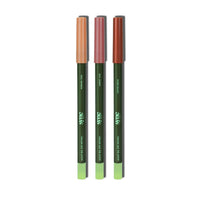
- Line the outer edge. A Lip Liner defines the true border of your lip and creates a subtle barrier that keeps colour from creeping inward toward the wet line.
- Apply colour, stopping just short of the inner rim. Leave the very innermost wet edge slightly lighter. Nobody sees it, and it is the exact strip that would otherwise print on your teeth.
- Do the finger pull. Form an "O" with your lips, slide a clean finger inside, and draw it out. It removes the surplus product from the inner surface — the stuff destined for your teeth — without disturbing the colour outside.
- Blot once. Press a folded tissue between your lips to lift the last of the surface oils and set the pigment.
Which formulas are least likely to smudge onto teeth?
Formula does a lot of the heavy lifting. As a rule, anything that sets and grips will transfer less than anything that stays wet and glassy.
| Formula | Teeth-transfer risk | Best practice |
|---|---|---|
| Matte / long-wear | Low | Blot once; grips on its own |
| Satin / cream lipstick | Medium | Line, blot, finger pull |
| Tinted lip oil / balm | Medium | Apply thin layers; blot excess |
| High-shine gloss | Higher | Keep away from inner rim; reapply lightly |
A Tinted Lip Oil gives you a soft wash of colour rather than a dense pigment load, so even if a trace migrates it is far less visible than a bold opaque shade. Building it in thin layers keeps the finish fresh without excess sitting on the surface.
What about drinks, coffee and long days?
Wet lips transfer more, so re-blot after your morning coffee and after meals. If you top up colour through the day, wipe the inner rim clean with a tissue corner first — reapplying over accumulated product is what builds up the smudge-prone excess.
How do you check before you leave the house?
Give yourself a five-second mirror check: smile widely, then run your tongue lightly over your front teeth. If there is nothing to feel, you are clear. Keep a folded tissue in your bag for quick blotting after coffee, and you will rarely be caught out. A little foresight beats a mid-meeting surprise every time.
Lipstick migrates onto teeth when excess colour sits on the wet inner rim of your lips.
Key takeaways
- Teeth transfer comes from excess colour on the wet inner rim of the lip.
- Keep the innermost edge slightly lighter than the rest of your lip.
- The finger-pull trick removes the exact product that would print on your teeth.
- Line the outer edge to create a barrier and blot to set the pigment.
- Matte and long-wear formulas transfer least; high-shine glosses need the most care.
- Re-blot after drinks and meals, and clean the rim before topping up.

Frequently asked questions
Does lip liner really stop lipstick getting on teeth?
Yes, indirectly. A liner defines the outer border and gives the colour a boundary, which discourages it from creeping toward the wet inner rim where transfer happens. It also helps colour last longer, so you reapply less often.
Is the finger-pull trick hygienic?
It is, as long as your hands are clean. You are simply removing the surplus product from the inside of your lips before it can move onto your teeth. Use a clean fingertip each time.
Why does my lipstick smudge more in summer?
Heat softens waxes and keeps emollient formulas slippery for longer, so pigment stays mobile. Blot more often in warm weather and consider a lighter, more grippy formula for hot days.
Can a tinted lip oil get on your teeth?
It can leave a faint trace, but because the colour is sheer it is rarely noticeable. Apply in thin layers, keep it off the very inner edge, and blot once to minimise any transfer.


Leave a comment
Please log in to your account to join the discussion.
Log in to comment