

How to Fix Patchy, Uneven Lipstick
Short answer: Lipstick goes patchy when the surface underneath is uneven — dry flakes, a slippery balm base, or bare spots the colour skips over. Fix it by buffing away flakes, conditioning and blotting, filling the whole lip with liner so colour has an even base, then applying in thin blotted coats. If patchiness only shows on the inner lip, it is usually eating and drinking wearing colour from the centre outwards, which a quick blot-and-reapply solves.
Why does my lipstick look patchy and uneven?
Patchiness is nearly always about the canvas, not the colour. Lipstick is a thin film, so anything uneven underneath shows straight through it. Dry flakes grab more pigment and look darker; smooth areas take less and look lighter; slippery spots repel colour altogether.
The other common pattern is centre-of-the-lip fade. Eating, drinking and pressing your lips together wear colour from the middle first, leaving a darker ring around the edge. That is normal wear, and it is easy to manage once you know the cause.

How do I prep my lips so lipstick goes on evenly?
Even colour starts before the lipstick. The goal is a smooth, lightly conditioned, non-slippery surface.
- Buff away flakes. If lips are flaky, gently massage a fine scrub such as our Matcha Lip Scrub for around 20 to 30 seconds, then wipe clean. This removes the dry patches that grab pigment unevenly. Skip it on cracked or sore lips.
- Condition, then wait. Apply a thin layer of Lip Balm and let it absorb for a few minutes so lips are supple, not shiny-wet.
- Blot off the excess. Press a tissue over your lips. A greasy base makes colour bead and skip, which reads as patchiness.
How to fix patchy lipstick, step by step
Once lips are prepped, technique does the rest.
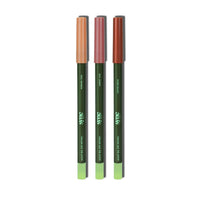
- Fill the whole lip with liner. Outline with a Lip Liner, then colour in the entire lip, not just the border. A full liner base evens out the surface and gives lipstick a uniform tone to sit over.
- Apply the first thin coat. Spread colour evenly from the centre outwards, pressing rather than dragging so it deposits into every part of the lip.
- Blot. Press a single-ply tissue gently over the lips to set the layer and lift any excess.
- Layer a second thin coat. This fills any spots the first coat missed and evens the tone. Two thin, blotted coats are far more even than one thick one.
- Check the inner rim. Dab a little extra colour on the inner edges where wear shows first, then press lips together to blend.
What is the fastest fix when lipstick goes patchy midday?
You do not need to start over. The trick is to reset the surface before you add more colour.
- Blot first. Press a tissue over the lips to remove worn, uneven colour. Reapplying over patchiness only cakes it.
- Reapply a thin coat. Because you filled the lip with liner earlier, a quick swipe over the top refreshes the whole look in seconds.
- Smooth dry spots. If a patch feels dry, a touch of conditioning colour such as a Tinted Lip Oil both evens the texture and adds sheer colour back.
Which finishes look patchy most easily?
| Finish | Tendency to look patchy | Best fix |
|---|---|---|
| Matte | Higher — clings to dry areas and shows every flake | Thorough exfoliation and a full liner base |
| Satin / cream | Moderate — more forgiving but still needs a smooth base | Condition, blot, thin coats |
| Sheer tint / oil | Lower — sheer colour blurs unevenness | Simply reapply; little prep needed |
| Long-wear stain | Higher if applied over flakes | Prep well, apply evenly, do not go back over half-dry colour |
If patchiness frustrates you and you want colour with more room for error, sheer conditioning formulas are the most forgiving because they blur rather than sit on the surface.
Lipstick goes patchy when the surface underneath is uneven — dry flakes, a slippery balm base, or bare spots the colour skips over.
Key takeaways
- Patchiness is a surface problem — flakes, slip and bare spots — not usually the formula.
- Buff away flakes, condition, then blot before colour.
- Fill the whole lip with liner for an even base tone.
- Build colour in thin, blotted coats rather than one thick layer.
- To fix midday patchiness, blot first, then reapply a thin coat.
- Matte and stain finishes need the most prep; sheer tints are the most forgiving.

Frequently asked questions
Why does my lipstick go patchy in the middle of my lips?
That area wears first from eating, drinking and pressing your lips together. Blot away the worn colour, then reapply a thin coat over your liner base to even it back out.
How do I make matte lipstick less patchy?
Matte formulas cling to dry skin, so exfoliate flakes first, condition and blot, then apply over a full liner base in thin coats. That smooth, even surface is what matte needs to look flawless.
Can I fix patchy lipstick without removing it?
Yes. Press a tissue over the lips to blot away the uneven colour, then apply a fresh thin coat. Blotting first is what stops the reapplication from caking.
Does lip liner help with uneven colour?
A lot. Filling the whole lip with liner gives lipstick a uniform base tone to sit over, so bare or slippery spots do not show through as patches.
Why is my lipstick darker on some parts of my lips?
Dry, flaky areas grab more pigment and look darker, while smooth areas take less. Exfoliating and conditioning before applying evens out how the colour deposits.
Which lip formula is most forgiving if I struggle with patchiness?
Sheer, conditioning formulas like a tinted lip oil are the most forgiving because they blur unevenness rather than sitting on top of it. Matte and long-wear stains demand the most careful prep.


Leave a comment
Please log in to your account to join the discussion.
Log in to comment