

How to Get a Long-Lasting Lip Stain
Short answer: A lip stain lasts because pigment grips a smooth, clean, fairly dry surface rather than sitting on top of balm. To get the longest wear, exfoliate flakes, condition and blot so lips are smooth but not greasy, apply colour in thin layers and let each one set before adding the next, then blot and press on a final layer. A liner filled across the whole lip deepens the stain, and a light balm at the end keeps it comfortable without lifting the colour.
What is a lip stain and why does it last longer?
A lip stain is colour designed to tint the surface of the lips rather than sit on top as a thick film. Because the pigment grips the lip itself, it survives talking, eating and drinking far better than a glossy layer that transfers off in one go. That is why a stain is the most durable way to wear colour.
The trade-off is that stains can feel drier than a balm or oil, and they show unevenness more, so prep matters more than with any other lip product. Get the base right and a stain will outlast everything else in your bag.

How do I prep my lips for the longest-lasting stain?
The base for a stain should be smooth and clean, but not slippery, because oil stops pigment gripping.
- Exfoliate flakes. Gently buff with a fine scrub such as our Matcha Lip Scrub so colour grips evenly rather than clinging to dry patches. Skip this on cracked or sore lips.
- Condition, then wait and blot. A thin layer of Lip Balm keeps lips comfortable, but let it absorb fully and then blot, so no greasy film remains to block the stain.
- Start on a matte-ish surface. The lips should feel soft and smooth but look matte, not shiny, when you apply the colour.
How do you apply a lip stain so it lasts, step by step?
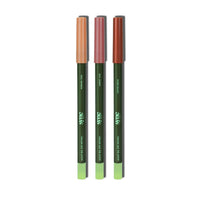
- Line and fill with liner. Use a Lip Liner to outline and then fill the whole lip. A full liner base deepens and extends the stain because it adds a layer of grippy colour underneath.
- Apply a thin first layer of colour. Press it into the lips rather than dragging, working from the centre outwards.
- Let it set. Give it 30 seconds or so to grip. This settling time is what turns colour into a stain.
- Blot gently. Press a tissue over the lips to remove surface excess and leave the tint behind.
- Layer again. Add a second thin coat over the blotted stain for depth, and set again.
- Finish light. If lips feel dry, press on a whisper of balm at the very end. Do it last and keep it thin so it soothes without lifting the colour.
How can I make an existing lip product act more like a stain?
You do not always need a dedicated stain formula. The blot-and-build method turns many colours into a longer-wearing tint.
| Technique | What it does |
|---|---|
| Full-lip liner base | Adds grippy colour that survives after the top layer wears |
| Thin layers, set between | Lets pigment grip instead of sitting as a thick film |
| Blotting each layer | Removes slip and leaves tint bonded to the lip |
| Minimal balm underneath | Stops oil blocking the pigment |
| Light balm only at the end | Adds comfort without lifting colour |
For a graduated, built-up base with real staying power, a set like the Lip Contour Trio lets you line, shade and blend so the tint has structure to hold onto.
Will a tinted lip oil give me a lasting stain?
Here is the honest part. A sheer, oil-based colour such as a Tinted Lip Oil is designed for comfort and shine, not long wear, so it is a refresh-through-the-day product rather than a stain. Its oil content is exactly what a stain needs to avoid. If lasting colour with minimal touch-ups is the goal, build a stain over a liner base; if softness and easy reapplication matter more, an oil is the better choice — just expect to top it up.
A lip stain lasts because pigment grips a smooth, clean, fairly dry surface rather than sitting on top of balm.
Key takeaways
- A stain lasts because pigment grips the lip rather than sitting on top of balm.
- Prep is critical: exfoliate flakes, condition, then blot so lips are smooth but not greasy.
- Apply in thin layers and let each set before the next.
- A full-lip liner base deepens and extends the stain.
- Blot between layers, and keep any balm thin and last.
- Sheer tinted oils are for comfort and refreshing, not long-wear staining.

Frequently asked questions
How do I make a lip stain last all day?
Prep a smooth, non-greasy base, fill the whole lip with liner, then build colour in thin layers, letting each set and blotting between them. Keep any balm thin and apply it only at the very end.
Why does my lip stain look patchy?
Usually the surface was flaky or slightly greasy when you applied it. Exfoliate flakes, let any balm absorb and blot it first, then apply the stain in thin, even layers.
Can I use balm with a lip stain?
Yes, but timing matters. A thick balm underneath blocks the pigment, so keep the base thin and blotted, and save a light balm for the very end to add comfort without lifting the colour.
Does lip liner help a stain last longer?
Yes. Filling the whole lip with liner adds a layer of grippy colour that deepens the stain and keeps lips looking done as the top layer wears.
Is a lip stain more drying than lipstick?
It can feel drier because it is designed to grip rather than condition. Prepping with a thin, absorbed balm and finishing with a light balm keeps it comfortable without shortening the wear.
Can a tinted lip oil work as a stain?
Not really — its oil content is exactly what a stain needs to avoid, so it wears off rather than setting. Use an oil for comfortable, sheer colour you top up, and build a proper stain when you want lasting wear.


Leave a comment
Please log in to your account to join the discussion.
Log in to comment